AVASH / DESIGN & INSTALLATION
Audio design for gyms, fitness & aquatic spaces
Music contributes to the workout and wellness experience. A gym’s needs for clarity, dynamic headroom and balanced bass differ from the requirements of a pool or spa. AVASH design begins with use, target levels, architecture, environment and budget, aiming for suitable energy and intelligibility rather than loudness alone.
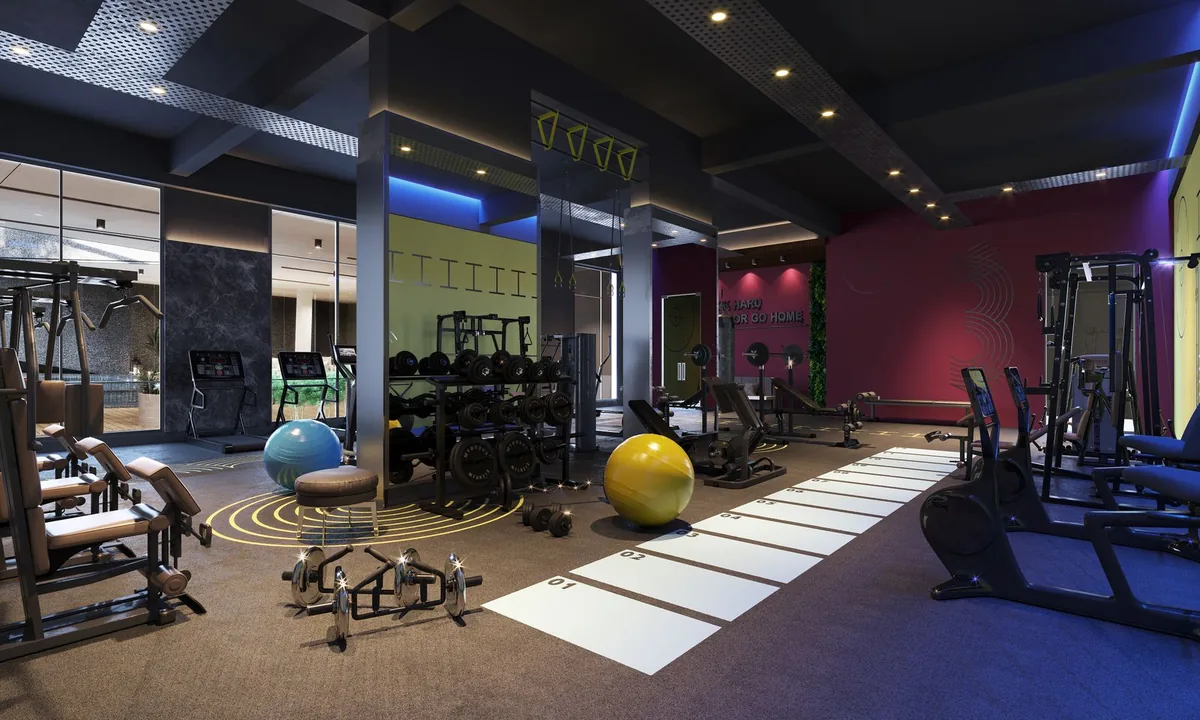
Audio engineering for gyms and fitness spaces
Sub-satellite systems and distributed coverage
In lower-ceilinged or divided spaces, a few large corner-mounted transducers can create large level differences. Distributed satellites and appropriate subwoofer placement are options for balanced coverage, but this architecture alone cannot guarantee identical bass everywhere.
- Select satellites for mid/high coverage and subwoofers for low frequencies, with coordinated crossover and output levels.
- Assess coverage at exercise positions, wall proximity and instructor communication.
- Yoga, Pilates, cardio and strength training do not necessarily need the same bass balance or level.
Powered or passive: infrastructure and operation
Passive systems can centralise amplification and DSP, with transducer cable runs to mounting positions. Powered designs place amplification in the enclosure and require local power and signal paths. Neither is universally more durable, economical or professional; assess cooling, service access, cabling and budget.
- Provide suitable rack ventilation, power and service access; calculate cable losses and amplifier loads.
- Powered installations require planned power provision, cable safety and access to elevated controls.
- Group classes may need a sweat-resistant headset, wireless coordination and instructor voice priority.
DSP and reflection control
Mirrors, hard floors and high ceilings can reduce intelligibility. Placement, aiming and acoustic absorption where needed complement DSP. Equalisation alone does not correct reverberation time. Properly specified limiting can reduce overload risk, but cannot guarantee protection from every failure or distortion under all settings.
Pools and spas: humidity, chlorine and temperature
Humidity, corrosive substances and heat can shorten the life of unsuitable equipment. Pools, showers, saunas and outdoor areas require different assessments. An IP rating describes specified ingress protection; it does not alone establish resistance to steam, chlorine, corrosion or sauna temperatures.
- Assess diaphragm, grille, brackets and finishes against documentation and exposure; a waterproof label is not an absolute guarantee.
- Connection covers, glands, orientation, drainage and installation instructions form part of the design.
- In reflective spaces, prioritise direct coverage of intended listening areas and spill control over simply increasing output.
Assessing Ecler and Monitor Audio options
Outdoor Ecler models and environmental Monitor Audio ranges, including Climate, are options for assessment according to exact model and installation conditions. For example, eMOTUS5OD documentation specifies IP65 and an operating-humidity limit; that rating alone does not approve saturated-humidity or sauna use. Driver technology or brand name cannot replace environmental and coverage assessment.
Design approaches by application
This table outlines initial assessment; final equipment follows the project brief.
| Space | Main challenge | Options to assess |
|---|---|---|
| Gym and CrossFit | Equipment noise, clarity and headroom | Powered or passive systems with assessment of bass reinforcement, coverage and limiting |
| Group exercise | Music and instructor speech | Distributed coverage, mixing and an appropriately sweat-resistant headset |
| Pool and spa | Reflections, humidity and corrosive exposure | Environment-approved equipment; IP is not the only criterion |
| Treatment and changing rooms | Gentle music and independent control | Discreet transducers and needs-based zoning |
Questions before starting
Is powered or passive audio better for a gym?
It depends on cabling, power, target levels, rack provision, servicing and budget. Passive designs can centralise controls and amplification; powered systems may suit flexible deployment. Neither is universally preferable.
Why can speech be unclear around a pool?
Water and hard finishes can increase reflections and reverberation. Assess geometry, placement, aiming, levels and suitable wet-area absorption where feasible. Extra transducers or equalisation alone cannot guarantee a complete solution.
Can the gym, pool and reception be controlled separately?
Suitable channels and controls enable independent zone levels. Different music also requires sources and routing. Paging priorities depend on equipment capabilities; emergency voice evacuation has additional system and design requirements.
Related services
Fitness and aquatic audio consultation
Share dimensions, ceiling height, uses, humidity and temperature conditions, power, cabling and budget with AVASH to assess options suited to the actual project.
Discuss your project