
AVASH / DESIGN & INSTALLATION
Conference rooms & boardrooms: audio, displays and ceiling microphones
Conference AV is about more than reproducing sound and pictures. Speech intelligibility, content legibility from the seats and online-call quality define the experience. Design follows table layout, acoustics, participant numbers and meeting needs, keeping equipment and cabling coordinated with the space.
Conference microphone system architectures
Wired conference systems for formal discussions
Chairperson and delegate units connect through manufacturer-approved system cabling or networks. Daisy-chain or star arrangements, cable types and power delivery vary by system; standard Cat6 cannot be assumed to suit every model.
- Close microphone placement and no unit-battery charging for cable-powered models.
- Discussion management, voting or interpretation where supported by the selected equipment and configuration.
- Consider for fixed tables and formal meetings. Reliability depends on correct cabling, power and configuration rather than an absolute zero-failure guarantee.
Wireless conference systems and flexible layouts
Wireless units can reduce table-cabling constraints in multipurpose rooms and movable layouts. Radio, dedicated-network or infrared operation, encryption and coverage depend on the model.
- Reconfigure tables and remove units after meetings, with storage and charging arrangements.
- Survey the radio environment, channel capacity, battery management and coverage before handover.
Ceiling arrays and uncluttered tables
Ceiling arrays move voice capture away from the table. Depending on the model, beamforming can steer or automatically manage pickup areas. Performance depends on height, participant distances, noise, reflections and equipment capabilities; ceiling capture does not replace acoustic treatment.
- AEC reduces the return of far-end audio through the call path. Noise reduction and room-reverberation control are separate functions; AEC does not guarantee removal of ventilation noise or glass reflections.
- Coordinate microphones, transducers and processing through placement and commissioning. Local voice reinforcement or voice lift requires its own design.
- Camera tracking requires compatible microphone, PTZ camera and control integration; a ceiling microphone alone does not establish automatic tracking.
Displays, networked audio and conferencing
Voice capture, content display, call-audio routing and user controls need to be designed together. Floor area or brand name alone is insufficient for equipment selection.
- Assess screen size against viewing distances, content, text size and ambient light. Projection also requires lens-ratio and installation-distance calculations; AVASH tools provide an initial estimate.
- Dante and AES67 support networked audio on compatible equipment. Verify interoperability, clocking, latency, switches and configuration rather than assuming zero delay or universal model support.
- Tracking, framing and conferencing-platform compatibility form part of commissioning. Internet access and far-end equipment also affect the meeting experience.
Comparing conference-room approaches
No architecture is best for every room. This table outlines options and infrastructure for initial assessment.
| System | Table appearance | Infrastructure | Use to assess |
|---|---|---|---|
| Wired conference | Individual participant units | Manufacturer-approved cabling and power; table or floor routes | Formal meetings and fixed tables |
| Wireless conference | Removable participant units | Wireless coverage, central control and battery charging | Multipurpose rooms and movable tables |
| Ceiling array | Fewer devices on the table | Flush, surface or suspended mounting; network, power and audio interfaces according to the model | Boardrooms and online meetings with acoustic assessment |
AVASH conference installations
These projects illustrate different approaches to specific requirements; capabilities of one installation are not assumed for others.
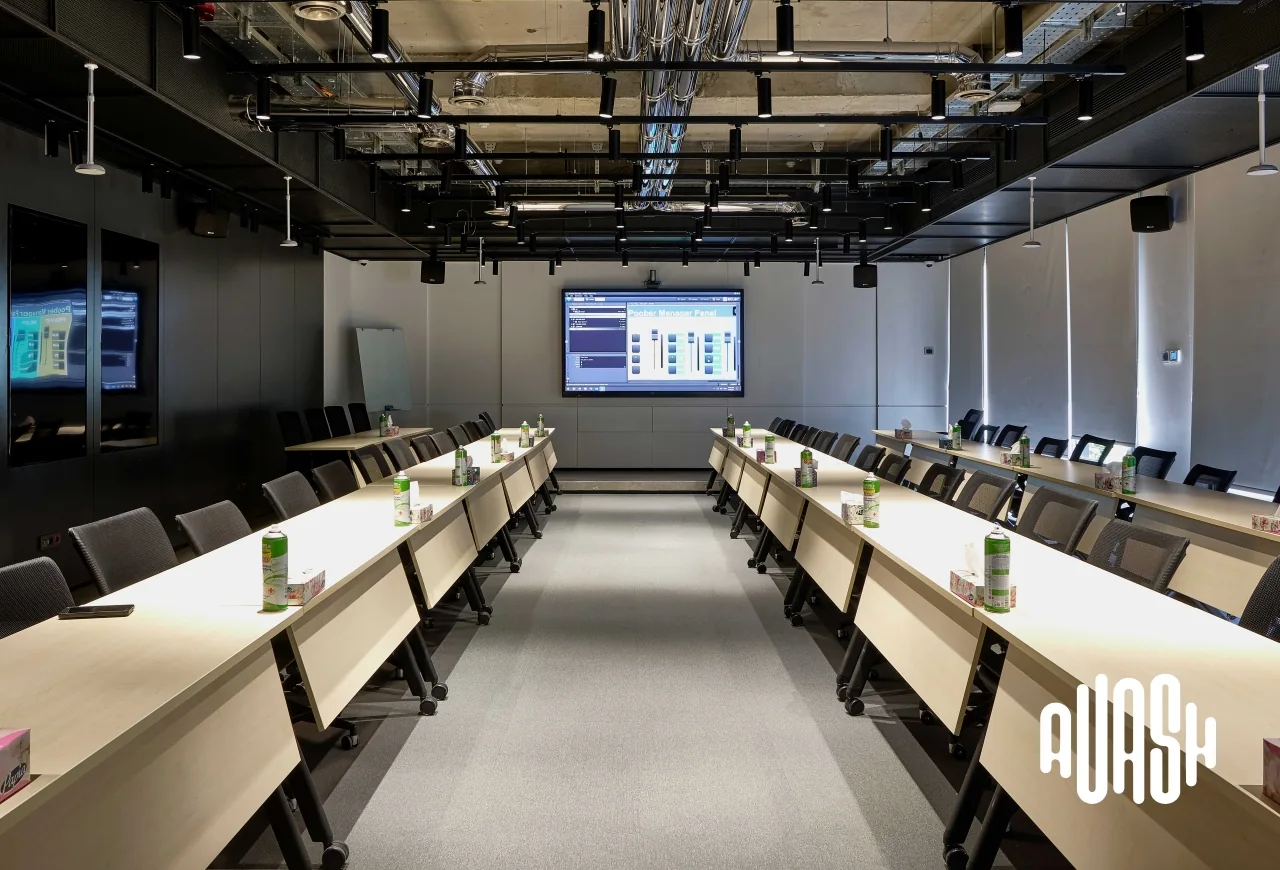
- Poober: Yealink ceiling voice capture and Ecler digital audio management using the documented AES67 network architecture, alongside an interactive display and custom control panel to keep microphones off the table.
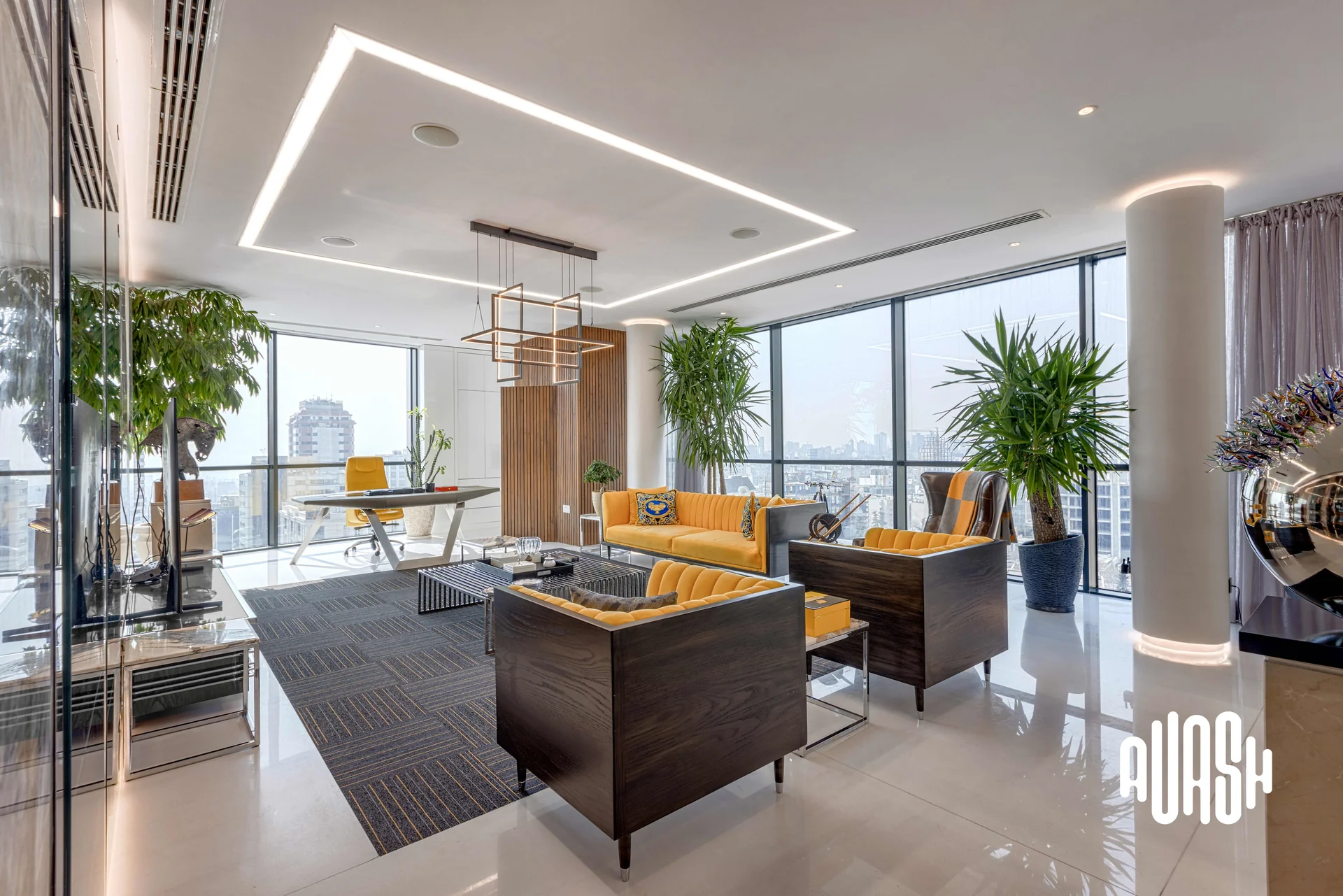
- Gozar, North Kamranieh: audio and visual integration coordinated with the interior and workplace and meeting requirements.
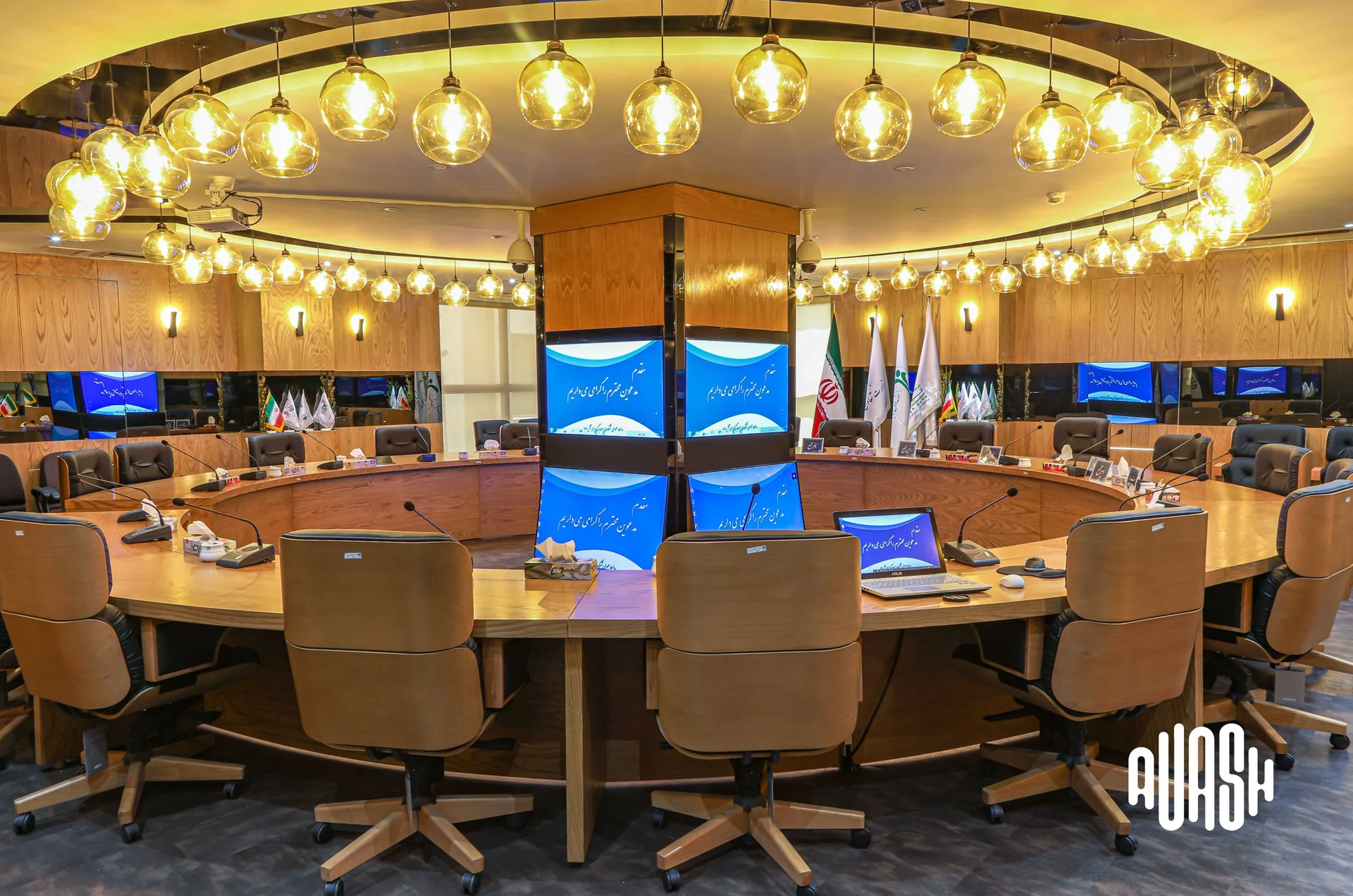
- Atie Saba: custom soundbars concealed in the central column and coordinated displays, focusing on intelligibility and reduced interaction between reinforcement and microphones.
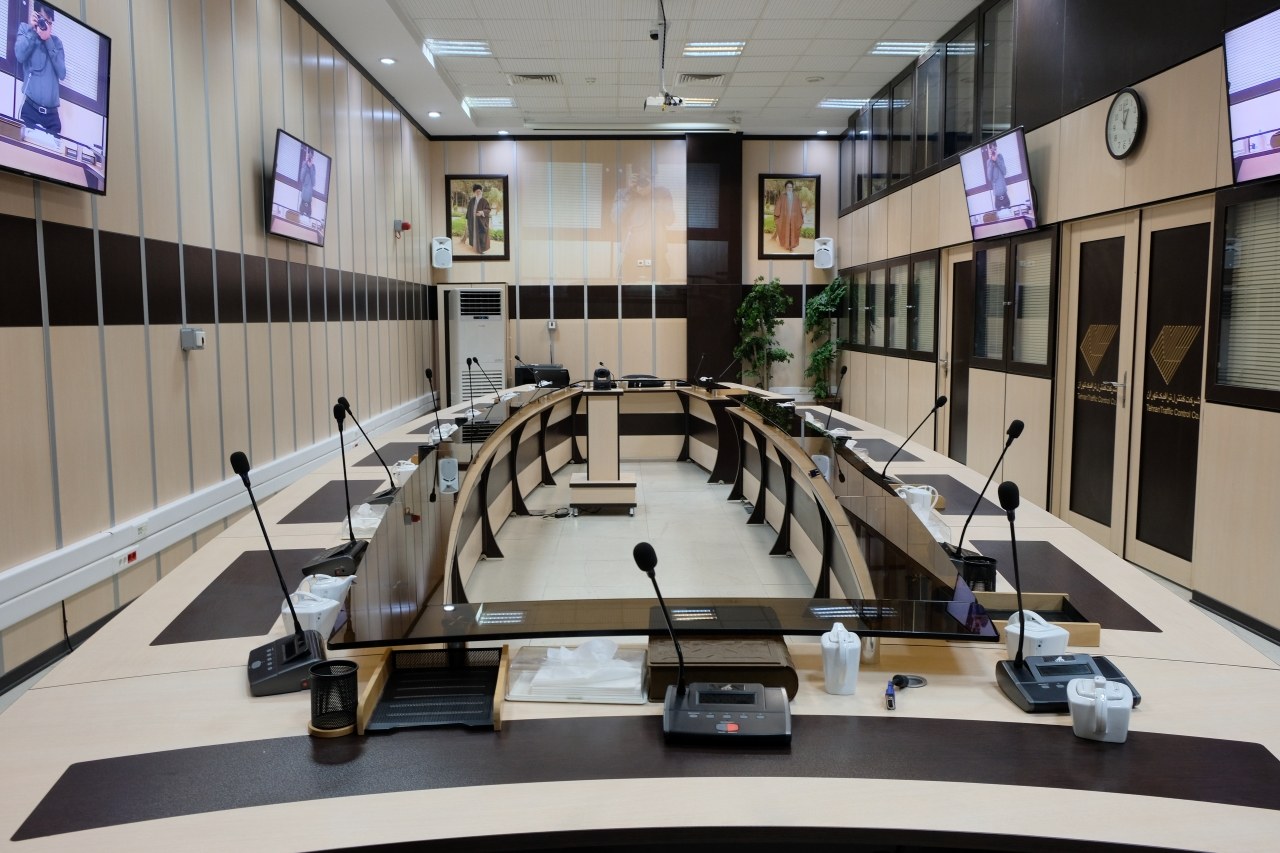
- Niayesh Traffic Control Center: D&D wireless conference units, video tracking, four wall displays and projector access from different table positions.
Questions before starting
Can a meeting table operate without desktop microphones?
Yes, where the room and a correctly selected and commissioned ceiling system support it; Poober illustrates this approach. Assess height, participant positions, noise and reflections. AES67 transports audio; it does not itself guarantee pickup quality or coverage everywhere.
Is a commercial display or projector preferable?
It depends on content, viewing distances, light and mounting. A display may suit bright rooms, but glare and angles still matter. Projection requires brightness, lens and lighting assessment; LED walls also require viewing-distance, pixel-pitch and budget evaluation.
What information supports an initial design and estimate?
Provide dimensions, finishes, ceiling plans, table layout, participant count, display content and online-meeting needs. Cable routes, power, network, conferencing platform and user controls also define the scope.
Relevant AVASH installations
Explore completed installations relevant to this service.
Related services
Conference-room design consultation
Send room plans or photographs to AVASH to assess audio, displays and controls, from tabletop units to ceiling arrays, around the architecture, meeting needs and budget.
Discuss your conference room